
Can technology enhance rather than replace human empathy? 🧠❤️
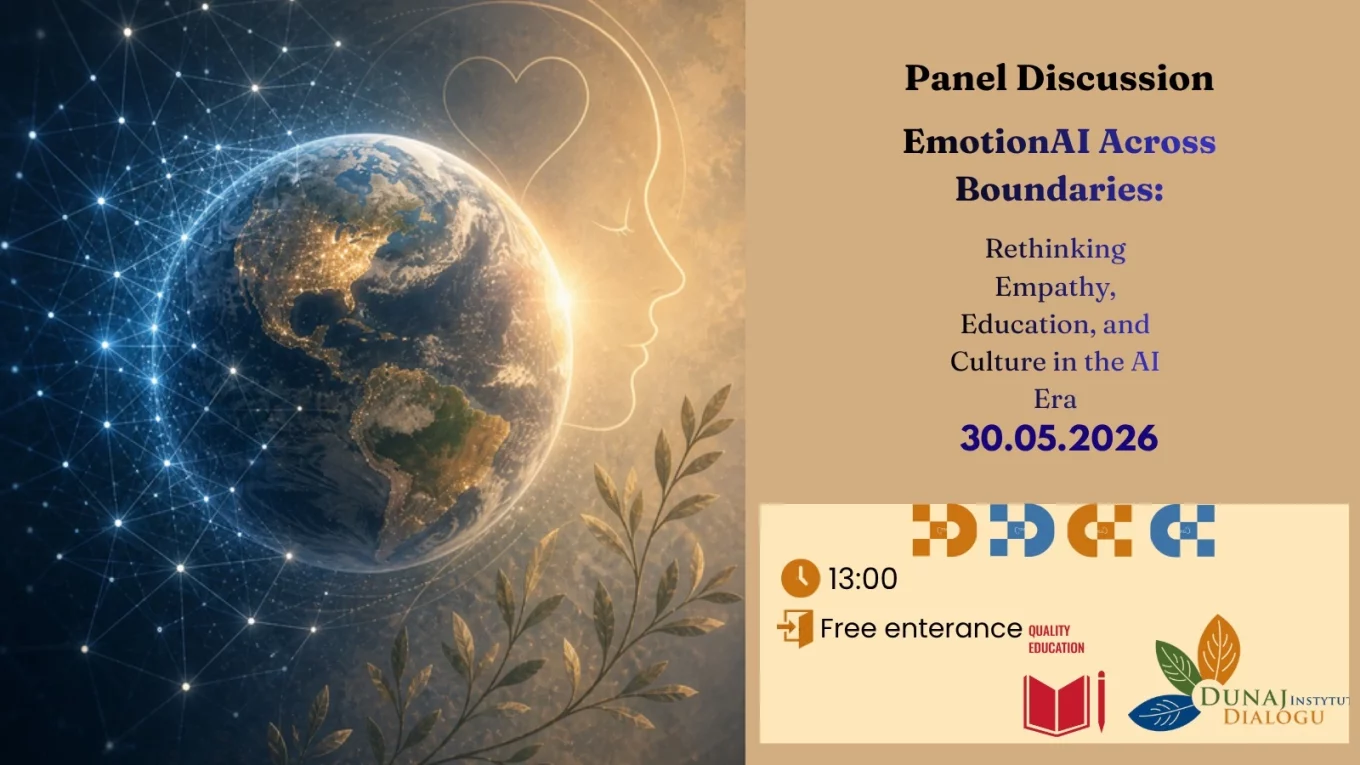
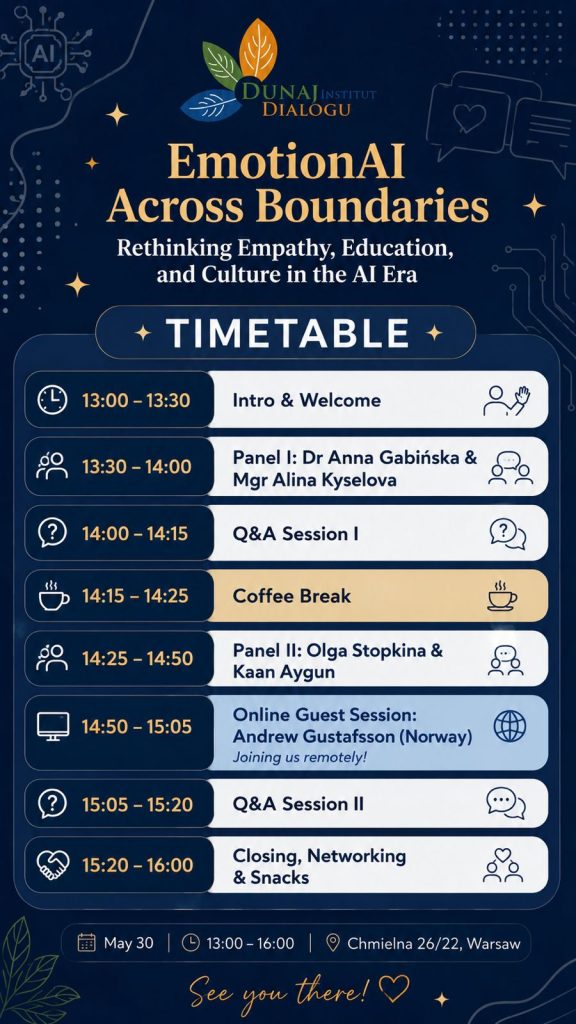
Join us on May 30th at the Dunaj Institute of Dialogue for a deep dive into the intersection of Emotional Intelligence and AI. Our final panel, ” EmotionAI Across Boundaries ,” serves as the culmination of our recent workshops and academies.
We’re bringing together key voices to discuss:
✅ How AI can support intercultural understanding.
✅ The role of empathy in digital education.
✅ Innovative approaches to responsible AI.
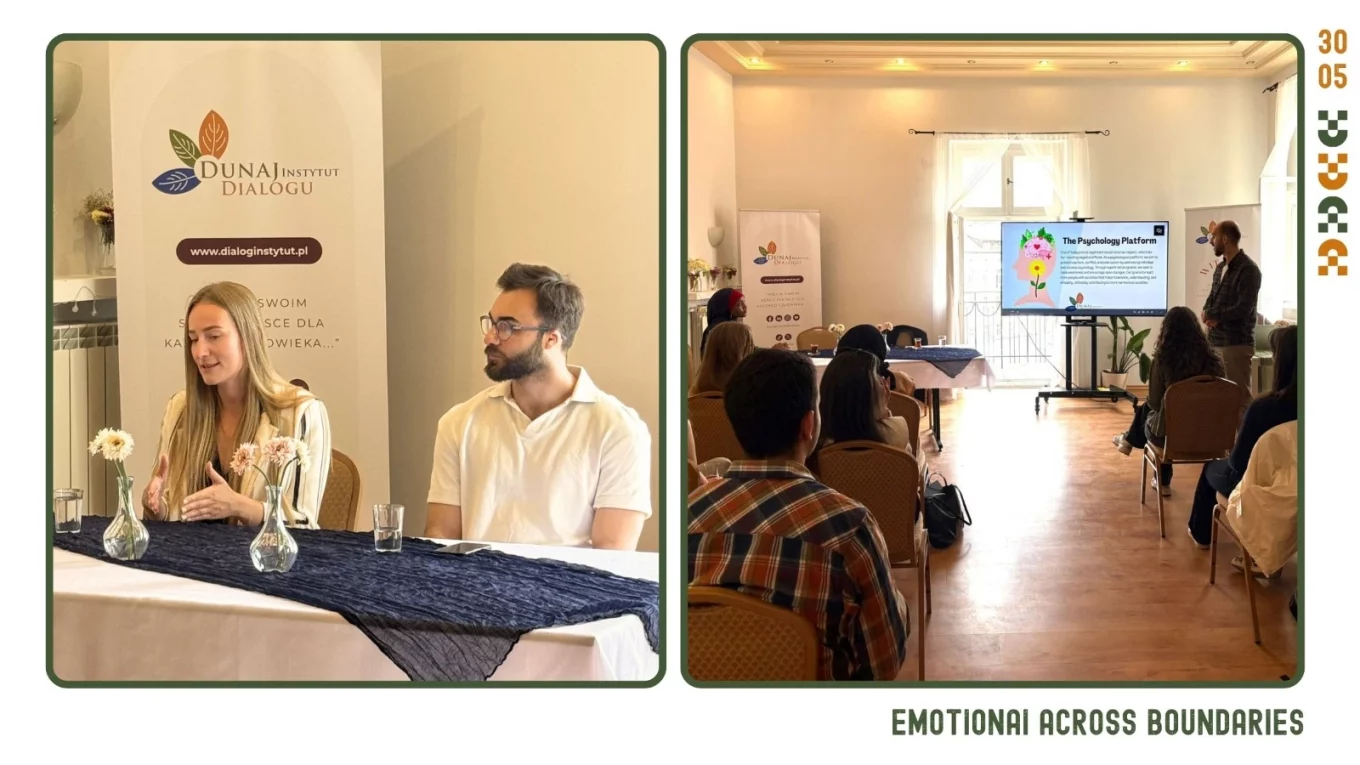
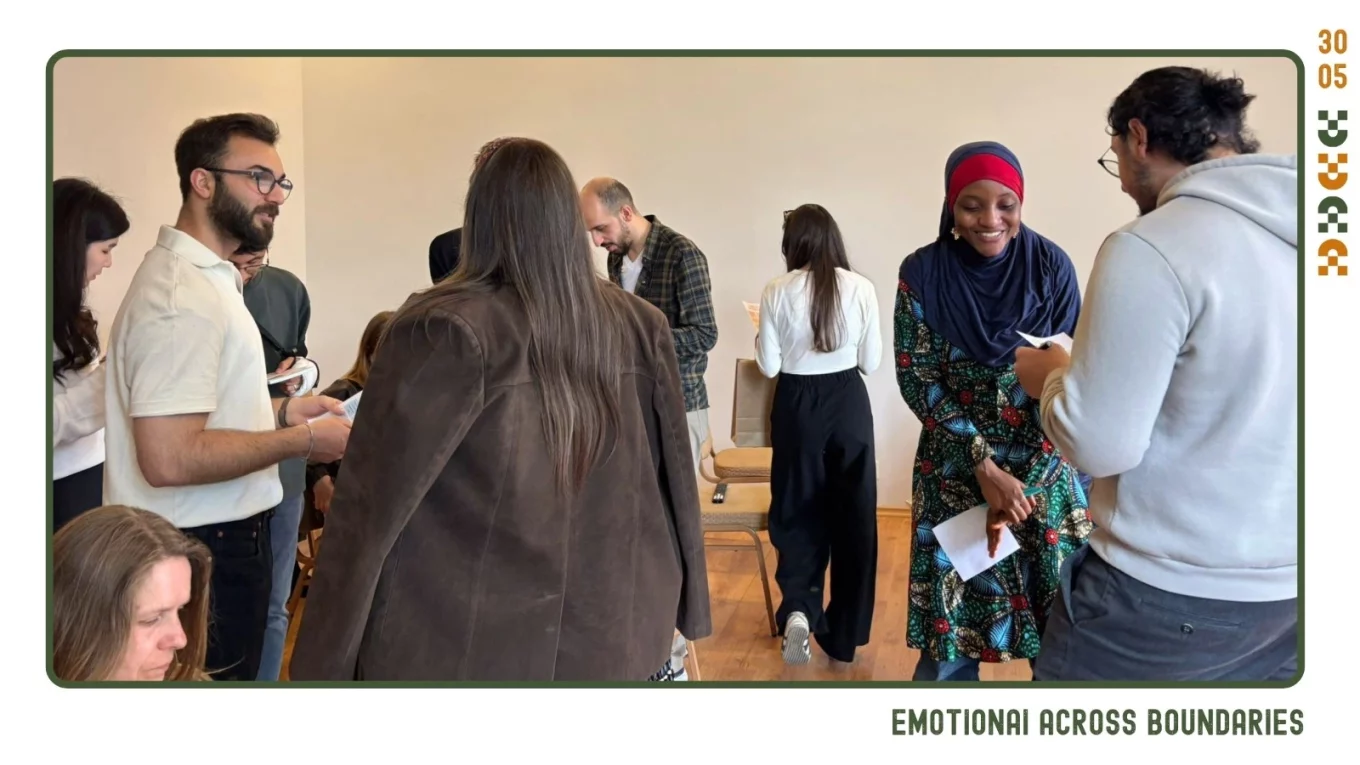
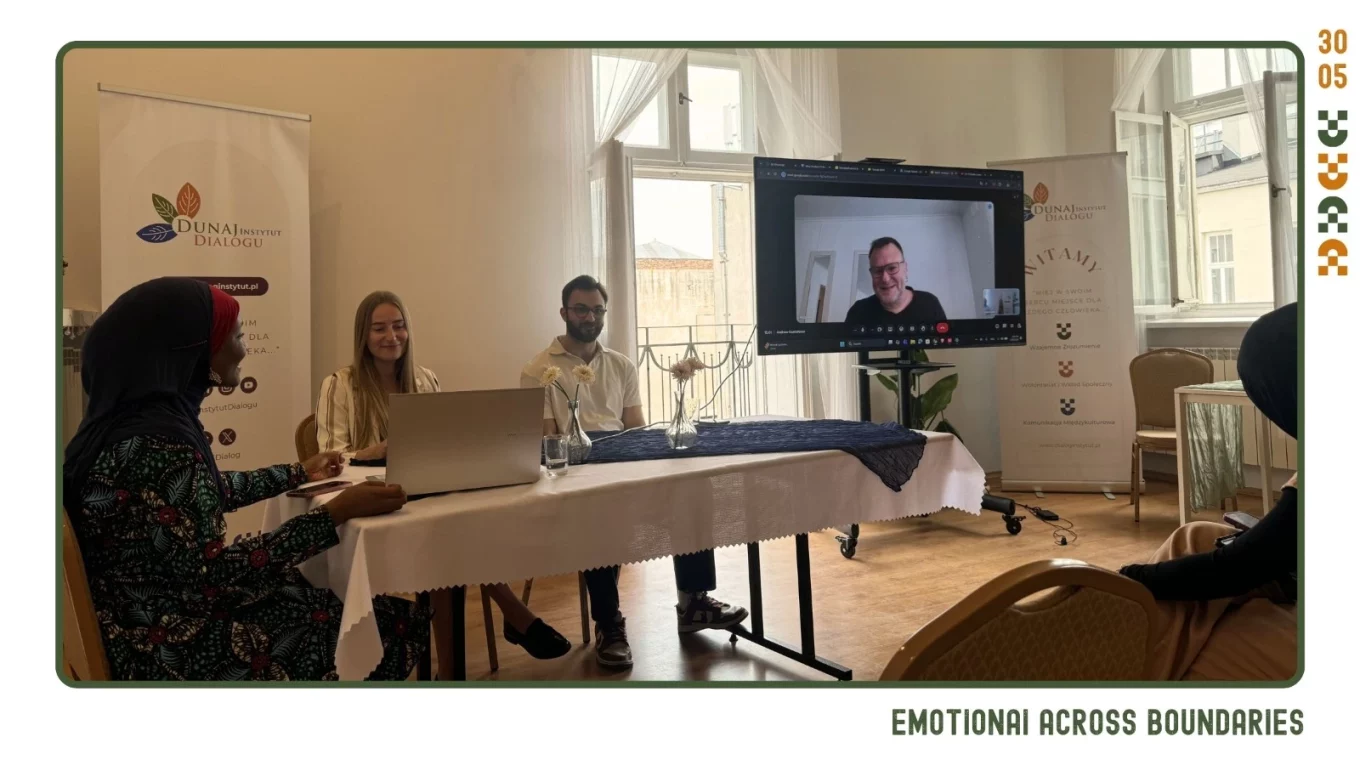
On May 30, we successfully concluded our international EmotionAI project with a closing panel discussion in Warsaw, bringing together psychologists, educators, AI professionals, and participants from diverse backgrounds to explore one of today’s most important questions:
? As AI becomes increasingly integrated into our lives, what happens to empathy, human connection, education, and emotional well-being?
Throughout the event, our speakers shared thought-provoking perspectives on the opportunities and challenges presented by artificial intelligence.
? Dr. Anna Gabińska emphasized that while AI may become increasingly present in mental health support, it cannot replace genuine human connection. She highlighted the importance of developing emotional regulation and learning to sit with uncomfortable emotions rather than constantly seeking quick solutions.
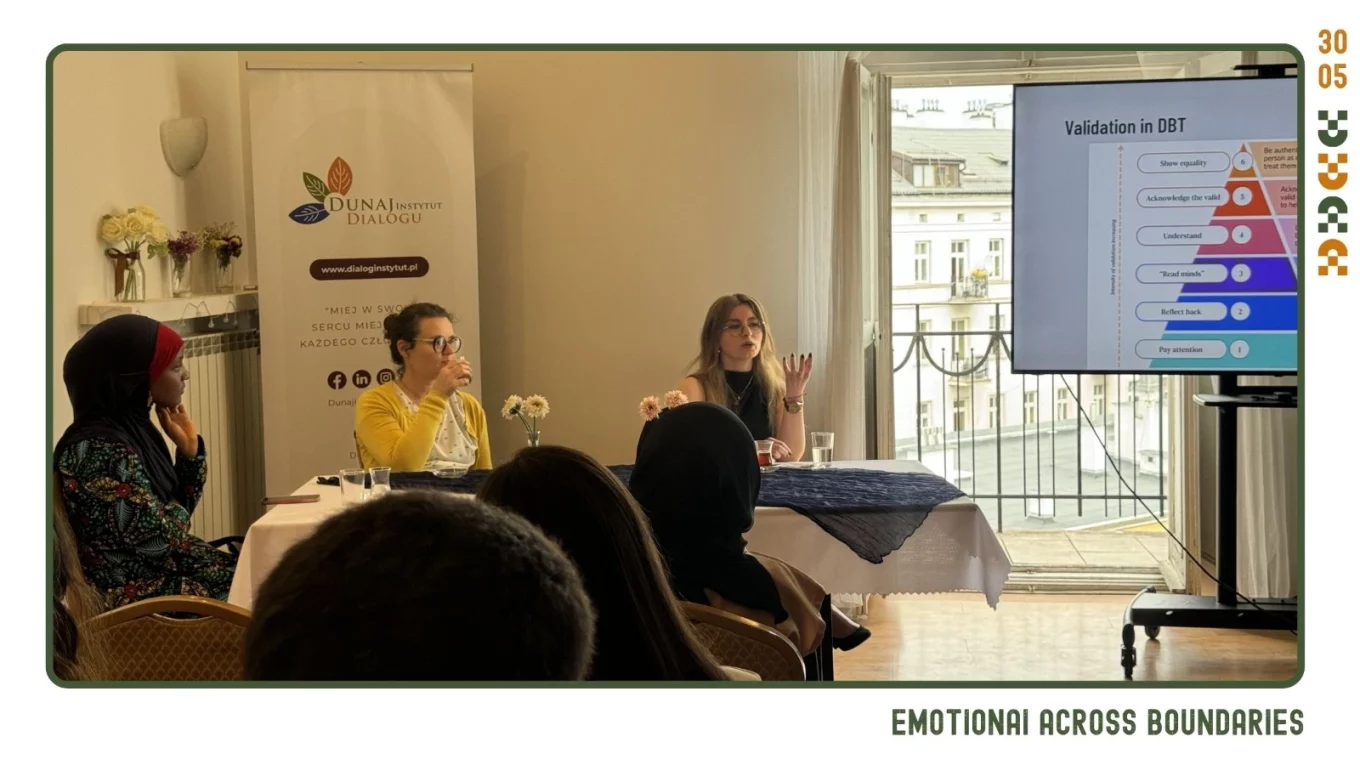
? Mgr Alina Kyselova explored the role of emotional awareness, mindfulness, and DBT-informed approaches in personal growth. She reminded us that emotional development requires authentic human relationships and that suffering often grows when we resist pain rather than accept it.
? Olga Stopkina discussed the rapid evolution of AI tools and their growing presence in everyday life. While recognizing their benefits, she stressed that AI should remain a tool that supports productivity and efficiency rather than a substitute for critical thinking, emotional growth, or human relationships.
? Kaan Aygun shared his experiences working with young people and highlighted the importance of teaching students to use AI ethically and responsibly. He emphasized that technology should enhance learning, not replace originality, creativity, and independent thinking.
? Joining us online from Norway, Andrew Gustafsson provided valuable clinical insights into the limitations of AI in psychological practice. Drawing from his experience as a clinical psychologist, he explained that AI lacks the nuance, emotional understanding, and human connection required for effective therapeutic work, particularly when supporting individuals experiencing trauma.
He also shared an emerging challenge facing mental health professionals today: more clients are arriving to therapy having already discussed their concerns extensively with AI systems, completed self-assessments, and formed conclusions about their difficulties before meeting a clinician. This, he argued, may require psychological assessment and diagnostic processes to evolve and adapt to a world where AI increasingly shapes how people understand their own mental health.
One message echoed throughout the entire discussion:
❤️ AI may become more sophisticated, but empathy, human connection, emotional intelligence, and meaningful relationships remain irreplaceable.
We would like to sincerely thank our speakers, moderator, participants, partners, and everyone who contributed to making this event possible.
The conversation does not end here. As technology continues to evolve, the challenge remains the same: ensuring that innovation serves humanity without replacing what makes us human.